
DHA vs DOH vs DHCC Which Licence Does Your UAE Healthcare Business Need
Share On:


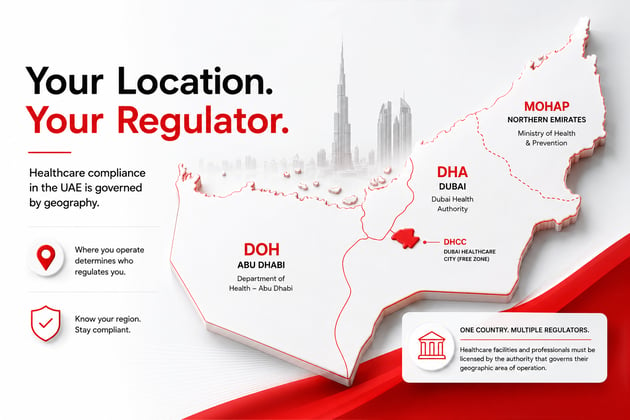
If you are expanding a healthcare business into the UAE, the authority you answer to is decided by one thing: where your facility physically sits. DHA licenses Dubai (outside the DHCC free zone), DOH licenses Abu Dhabi, MOHAP covers most of the Northern Emirates, and Dubai Healthcare City runs its own regime through DHCC and DHCR. A licence from one does not carry across to another emirate. Pick the location first, and the regulator picks itself.
That single rule is where most experienced operators lose time. In your home market you likely deal with one national regulator. The UAE does not work that way. It runs a decentralised system where geography, not your existing credentials, sets the rulebook you follow. Get that wrong and you can sign a lease, hire a team, and only then discover you filed with the wrong authority.
This guide breaks down who governs what, the two licence layers every UAE healthcare business has, and how to choose the jurisdiction that fits your model.
The One Rule That Decides Everything
Your regulator in the UAE is determined by the emirate your facility operates in, not by where you are already licensed. There is no single federal health licence that lets you open a clinic anywhere in the country. Each authority licenses only within its own territory, so your first strategic decision is location, and every downstream requirement follows from it.
Think of it like a road toll network. Your licence is a pass for specific roads. It is perfectly valid, but only on the stretch it was issued for. Cross into the next emirate and you need a different pass. Operators who assume a Dubai licence is a UAE licence are the ones who get caught out, because the assumption feels reasonable and is completely wrong.
The practical takeaway: decide the emirate before you commit to anything else, because it dictates your regulator, your platform, your fees, your timelines, and whether your clinicians can even practise on day one.
The Two Layers Every UAE Healthcare Licence Has
Every UAE healthcare setup involves two separate licences, and clearing one does not clear the other. The first is a commercial or facility licence that authorises the legal entity to exist and operate. The second is a professional licence for each individual clinician who will actually treat patients. A facility licence never authorises a person to practise. That always requires separate professional credentialing.
This trips up operators who think of licensing as a single event. In reality your medical director, doctors, nurses, and allied staff each need their own professional licence from the same authority that governs the facility, and those applications run on their own timelines involving qualification checks and primary source verification. Inside Dubai Healthcare City the split is even more explicit. The free zone authority DHCC issues the commercial licence to the entity, while its independent regulatory arm DHCR credentials the individual practitioners. Two bodies, two applications, one zone.
The lesson learned from real setups is simple. Sequence the professional licensing in parallel with the facility application, not after it, or you will have a licensed clinic with no one legally cleared to see patients.
How the UAE Health Authorities Compare
The four bodies most expanding operators deal with are DHA in Dubai, DOH in Abu Dhabi, MOHAP across the Northern Emirates, and DHCC with DHCR inside the Dubai Healthcare City free zone. Each governs a defined territory, uses its own application platform, and sets its own fees and standards. Sharjah has also moved much of its licensing to its own Sharjah Health Authority. The table below is your quick reference.
| Authority | Territory it governs | Licensing platform | Best suited to |
|---|---|---|---|
| DHA (Dubai Health Authority) | All of Dubai except the DHCC free zone | Sheryan | Clinics and centres serving the broad Dubai resident market |
| DOH (Department of Health Abu Dhabi, formerly HAAD) | Abu Dhabi city, Al Ain, Al Dhafra | TAMM and Malafi | Abu Dhabi facilities, government linked and academic medicine |
| MOHAP (Ministry of Health and Prevention) | Ajman, Umm Al Quwain, Ras Al Khaimah, Fujairah, plus federal institutions | MOHAP portal | Cost sensitive setups in the Northern Emirates |
| DHCC and DHCR | Dubai Healthcare City free zone only | DHCC for the entity, DHCR for clinicians | Medical tourism and internationally credentialed specialists |
A few nuances worth knowing. DOH applies its own Professional Qualification Requirements that can differ from the other authorities, so a qualification accepted in Dubai is not automatically accepted in Abu Dhabi. MOHAP generally carries the lowest fees of the mainland authorities, which matters if margins are tight. And all of the main authorities now follow a set of Unified Healthcare Professional Qualification Requirements, which has brought the documentation closer together even though the portals, exams, and validity remain separate.
DHCC vs DHA the Dubai Fork Operators Miss
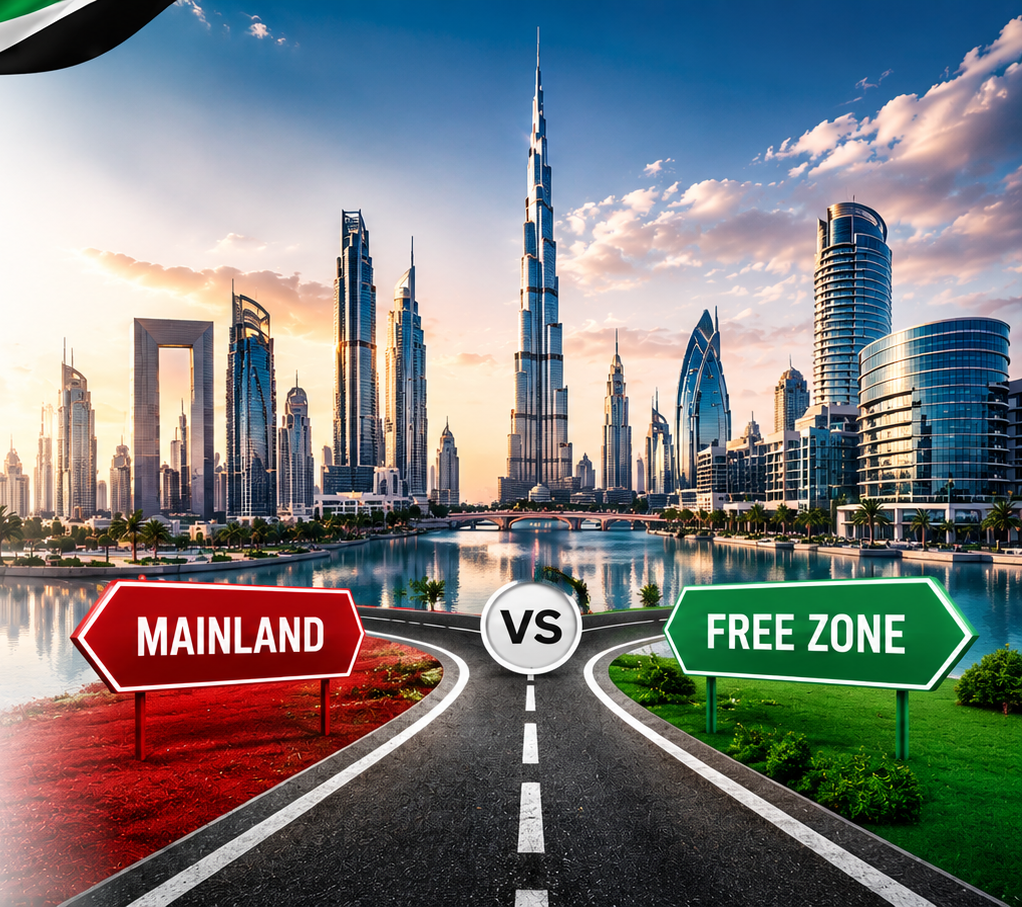
Within Dubai you face a second choice that changes your whole operating model: mainland under DHA or the DHCC free zone under DHCC and DHCR. DHA mainland lets you serve patients across all of Dubai without geographic restriction, which suits community practices, dental clinics, and specialist centres targeting residents. DHCC is a purpose built healthcare free zone geared toward medical tourism, multi-disciplinary specialist care, and providers bringing international credentials.
The differences are real and financial. DHCC providers are not bound by DHA pricing guidelines, so procedure pricing works differently inside the zone. The free zone supports a wide range of clinical and healthcare adjacent activities in one location, from clinical facilities to medical education and health technology companies, which is why international groups cluster there. Since 2021 the UAE has allowed full foreign ownership for most healthcare activities on the mainland too, so ownership is no longer the deciding factor it once was. Now the question is your patient base. Local residents point to DHA mainland. International patients and specialist ecosystems point to DHCC.
How to Choose Your Jurisdiction in Four Steps
Choosing correctly is a short, ordered process. Work through these four steps before you sign a lease or file anything.
1. Define your patient base and model. Local residents, medical tourism, government contracts, or specialist referral. This alone eliminates several options.2. Match the model to an emirate. Broad Dubai reach points to DHA mainland. Medical tourism points to DHCC. Abu Dhabi and Al Ain point to DOH. Cost led setups point to the Northern Emirates under MOHAP.
3. Confirm your clinicians can be licensed there. Check each authority's qualification requirements against your team's credentials before committing, because DOH in particular can differ.
4. Map both licence layers and their timelines. Plan the facility licence and the professional licences together, so your opening date reflects the slower of the two.
Run in this order, the decision is straightforward. Run it backwards, starting from a lease or a licence package price, and you inherit constraints you did not choose.
Key Takeaways
Your UAE regulator is set by the emirate your facility sits in, not by your existing licence. There is no national health licence.
Every setup has two layers. A commercial or facility licence for the entity, and a separate professional licence for each clinician.
DHA covers Dubai outside DHCC, DOH covers Abu Dhabi, MOHAP covers the Northern Emirates, and DHCC with DHCR governs the Dubai Healthcare City free zone.
Inside Dubai, DHA mainland suits resident focused care and DHCC suits medical tourism and international specialists.
Choose location first, confirm clinician eligibility, then sequence both licence layers in parallel.
Frequently Asked Questions
Does a DHA licence let me operate a clinic anywhere in the UAE? No. A DHA licence is valid only within the Emirate of Dubai, and even then it excludes the Dubai Healthcare City free zone, which has its own regime. To operate in Abu Dhabi you need DOH, and in the Northern Emirates you need MOHAP. Each authority licenses strictly within its own territory, so multi emirate operators hold multiple licences.
What is the difference between DHCC and DHCR? DHCC, the Dubai Healthcare City Authority, is the free zone body that issues the commercial or trade licence to the entity operating inside the zone. DHCR, the Dubai Healthcare City Authority Regulatory arm, is the independent regulator that credentials individual clinicians and enforces clinical governance. The entity applies to DHCC. Every practitioner applies separately to DHCR.
Can a non-medical investor own a healthcare company in the UAE? Yes. Since 2021 the UAE has permitted full foreign ownership for most healthcare activities on the mainland, and a non-medical investor can own the business. However, clinical responsibility is separated from ownership. The company must appoint a licensed medical director and employ properly licensed clinicians, and the authority reviews both the ownership structure and the clinical staffing plan.
Do my clinicians' existing UAE licences transfer to a new emirate? Not automatically. A professional licence is valid only in the jurisdiction that issued it, so clinicians moving to another emirate re-license with that emirate's authority. The process has become easier, since transfers no longer require a No Objection Certificate and a professional can hold up to three active licences at once across different authorities.
Which UAE authority has the lowest licensing fees? MOHAP, which governs the Northern Emirates of Ajman, Umm Al Quwain, Ras Al Khaimah, and Fujairah, generally carries lower fees than DHA or DOH, alongside a lower cost of living in those emirates. For a cost led setup that does not depend on a Dubai or Abu Dhabi address, the Northern Emirates can materially reduce both setup and operating expenses.
Is DHCC better than DHA mainland for my facility? Neither is better in absolute terms. It depends on your patient base. DHA mainland lets you serve residents across all of Dubai and suits community and specialist practices targeting locals. DHCC suits medical tourism, internationally credentialed specialists, and multi-disciplinary care, and its providers are not bound by DHA pricing guidelines. Match the jurisdiction to your model, not to a package price.
Who regulates healthcare in Sharjah? Sharjah has increasingly moved licensing to its own Sharjah Health Authority, which now handles many facilities and free zone healthcare businesses in the emirate. Some Sharjah facilities still fall under MOHAP, so the correct authority depends on the specific location and setup. Confirm which body applies to your intended premises before you begin any application.
Plan Your UAE Healthcare Expansion With Confidence
The UAE rewards healthcare operators who choose their jurisdiction deliberately and punishes those who back into it. Decide the emirate around your patient base, confirm your clinicians can be licensed there, and run both licence layers in parallel. Do that and the regulatory path becomes predictable rather than a source of delay.
If you are planning a UAE expansion and want the jurisdiction call, the facility licence, and the professional licensing handled as one coordinated process, UAE Corp Hub manages healthcare setup and government liaison across every emirate. Talk to our team to map the right structure before you commit.
About Author

Layla Al Dhaheri
Layla Al Dhaheri is a skilled Content Writer at Net2Source, crafting impactful, SEO-driven content that connects global audiences. Based in the UAE, she specializes in creating engaging web copy and marketing materials that enhance brand presence. Beyond work, Layla is passionate about Arabic literature and community empowerment.
Subscribe to
our Newsletter
We are ready to help you until and unless you find the right ladder to success.
Popular Posts
Related Posts
Join over 25,000 in beating the failure of strategies by following our blog.
Comments